5/14: Earthquake and Volcano Upticks
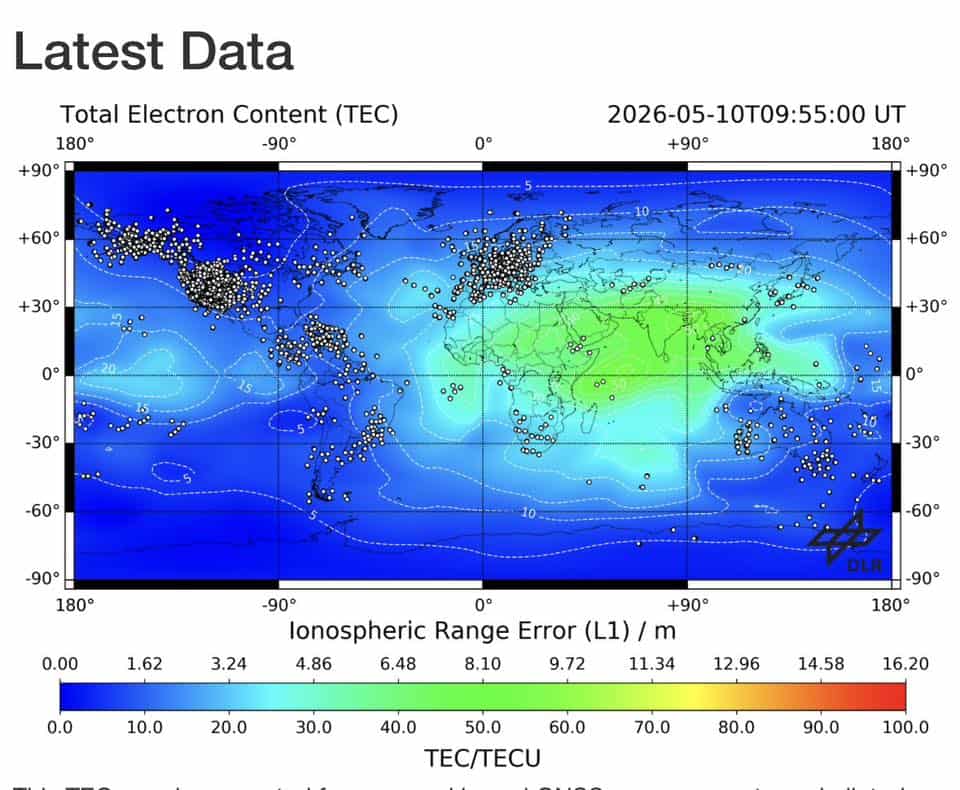
A lot of people are asking what’s going on right now with the earthquakes, volcanic activity, and strange electromagnetic data being monitoring, so let’s break it down.
Right now the Earth appears to be moving through a broad stress redistribution phase. Instead of one isolated area producing activity, we’re seeing movement across multiple connected tectonic and volcanic regions at the same time.
On the earthquake side, activity has increased across:
* Southern California / Imperial Valley
* Alaska / Aleutians
* Japan / Kurils
* Indonesia / Philippines
* Chile
* Puerto Rico and parts of the Caribbean
The recent Brawley / Imperial Valley swarm in Southern California is especially interesting and significant because that area is not just a normal fault zone. It sits in a tectonic transfer region where the San Andreas Fault, Imperial Fault, Gulf of California rift system, geothermal fields, and ancient volcanic structures all interact together.
Many people don’t realize Southern California actually contains active geothermal and magma-influenced regions, especially around the Salton Sea and Imperial Valley. The crust there is thinner, hotter, highly fractured, and full of conductive geothermal brines and underground fluid movement. It’s one of the most geologically unusual areas in North America.
That’s why this swarm has my attention.
The current sequence does not look like a single isolated quake. It looks more like the crust actively adjusting and transferring stress through a very complex and thermally active system. The fact that it’s happening while multiple Pacific Ring regions are also becoming active makes it even more interesting.
At the same time, several volcanic and geothermal systems around the world are also showing unrest. Iceland’s Reykjanes/Svartsengi region continues dealing with magma movement and crustal deformation, while volcanic arcs around Indonesia, Japan, Alaska, and other Pacific regions remain active as well.
Why this matters:
Volcanic systems and earthquake systems are more connected than many people realize. Magma movement changes underground pressure, affects fluid migration through the crust, alters conductivity, and can redistribute stress across nearby fault systems. The Earth behaves more like one connected dynamic system than isolated parts operating independently.
On top of that, we’ve also been seeing unusual atmospheric and electromagnetic behavior including:
* unstable Schumann resonance activity,
* elevated TEC and ionospheric anomalies,
* ELF/VLF electric field disturbances,
* and geomagnetic fluctuations.
These signals often show up during periods where the Earth system appears to be under increased strain or redistribution.
What does this mean?
It does NOT automatically mean a catastrophic earthquake or eruption is imminent.
What it DOES mean is:
the planet appears electrically, tectonically, and volcanically active right now, and multiple weak or stressed regions are responding at the same time.
What I’d expect over the next few days:
* continued earthquake swarms,
* scattered M4–M6 earthquakes globally,
* possible volcanic/geothermal escalation in already active systems,
* and continued Pacific Ring activity.
Things to watch for:
* earthquake swarms migrating north or expanding,
* stronger M5+ activity in Pacific regions,
* volcanic tremor increases,
* sudden quiet periods after intense swarming,
* or synchronized activity across multiple plate boundaries.
Right now this looks more like an active redistribution phase than a single isolated event. The Earth system still appears agitated and unresolved, so this is definitely a time to monitor closely, stay aware, and pay attention to patterns rather than focusing on one individual quake.